Curating reads
Gathering fresh stories and ideas for you
Curating reads
Gathering fresh stories and ideas for you
Curating reads
Gathering fresh stories and ideas for you
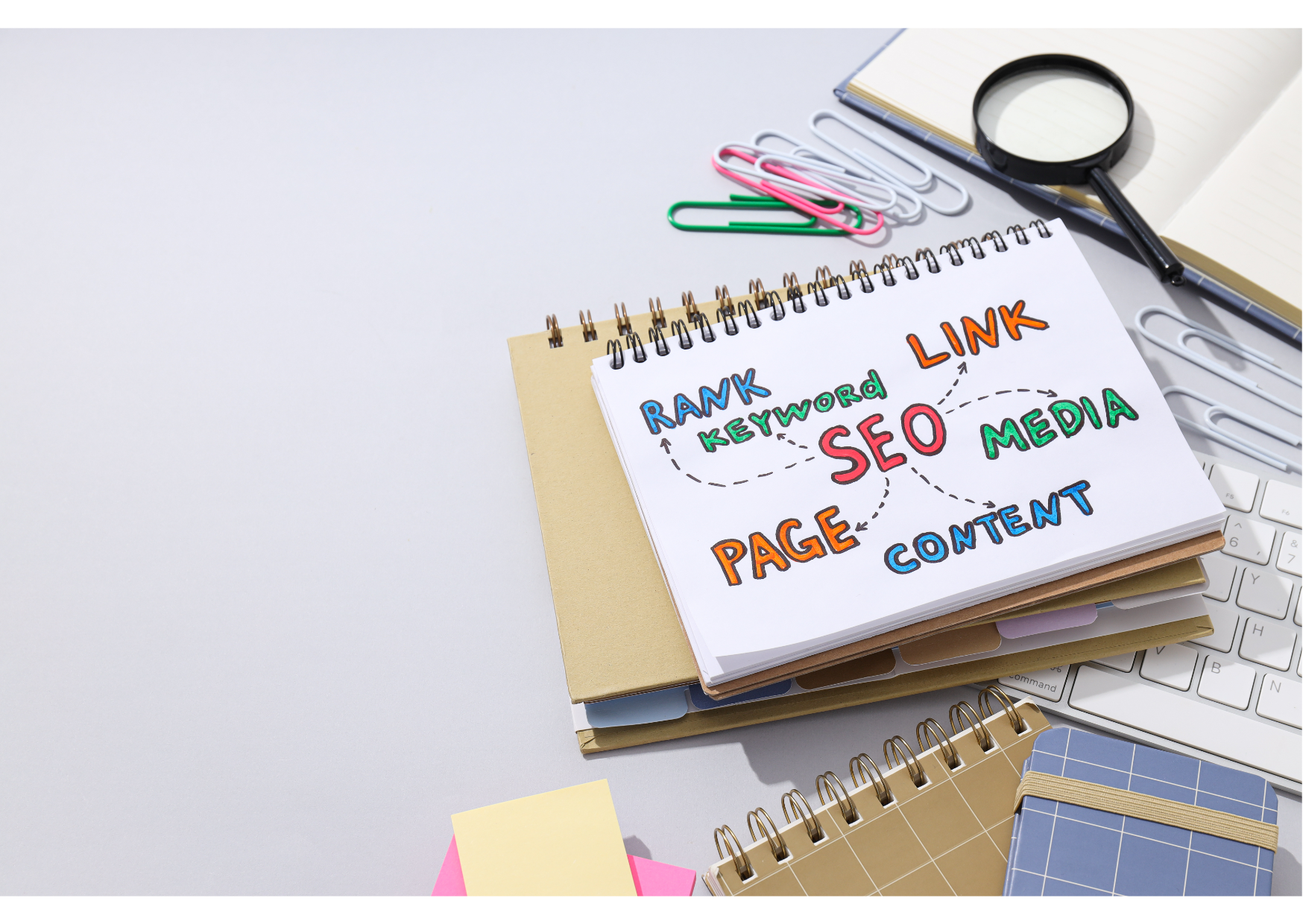

This on-page SEO checklist is an extensive plan to follow to improve the ranking of the service-providing websites in the search engines.
With the attention to such aspects as the optimization of the keywords, the description of the metadata, and the systematic data, you will be able to make your site more visible and appeal more to the potential customers.
This is a full list of SEO checklists that you need to follow to make sure that your site is optimized completely, both in regard to search engines and to the users.
Need an On-Page SEO Audit for Your Service Website?
Get a full audit that covers title tags, meta descriptions, headers, images, and internal links. Find issues and opportunities in one place.
Schedule Your Free ConsultationOn-Page SEO entails optimization of individual pages on the website to achieve a higher ranking in search results and to assist search engines in comprehending your content in better ways, which is crucial in page SEO.
This entire on-page SEO checklist involves several tricks, starting with the optimization of title tags and meta descriptions, to the enhancement of the page content and internal links.
On-page optimization concentrates on factors that are under your responsibility, on your site, to enhance its visibility in the search engine results, including the appropriate use of page headings.
With service-based websites schema will help to increase their visibility and ranking in search results.
On-page SEO will help to attract the local customers as well as create authority in your industry.
It is possible to check whether your website is maximally communicative to convey the services you provide and aim at the correct keywords by using a strong on-page SEO checklist.
The easier potential clients can find you through the search for the needed services on the Internet with the help of optimization of various elements like page titles and header tags, the higher the rankings.
On-page SEO has a direct effect on where your website appears in the search results because it affects the way search engines interpret and appreciate your content, showing how SEO can contribute to your visibility.
The variables, such as the speed of your page, its mobile-friendliness, or the availability of structured data, may be greatly optimized to ensure an enhanced ranking.
It is possible to rank higher by making sure your content matches search intent and making sure your internal links are done correctly to inform the search engines that your site is a useful resource.
The basis of a successful on-page SEO strategy is to identify the appropriate target keywords.
To do this, you are to follow such steps:
It is important to understand search intent to pick the right keywords that will bring the appropriate audience to your website so that your content is service provider-oriented.
Using SEO tools will be critical in conducting key research and optimizing the keywords. Such tools as Google Keyword Planner, SEMrush, and Ahrefs can help to understand the volume of keyword search, competition, and other relevant words.
These are the tools that assist you in the identification of target keywords that have high potential and competitive ranking.
With the help of SEO tools, you will be able to optimize your content and make your keyword strategy more refined to draw more relevant traffic and be ranked higher.
The process of maximizing the content to suit the keyword is an important process in enhancing the visibility of your site in search engines.
Incorporate your keywords that you want to have on your page and use them in a natural manner; your header tags, title tags, and meta descriptions.
On-page SEO also makes sure your content is relevant and high-quality, so be sure that your content is valuable to the visitors of your website and is relevant to the search intent.
Name your images using descriptive names and add alt text with keywords to add even more to your SEO optimization work.
The title tag is an HTML tag that describes the title of a web page and is shown on search engine result pages (SERPs) as the clickable headline of a particular result, and is a fundamental on-page SEO attribute.
A title tag should be well composed, must reflect the content of the page, and must contain your keyword.
The maximum character length should be about 50-60 characters so that it appears completely in search results.
The title tags should be optimized to guarantee clicks and better ranking in search.
Meta descriptions are a short description of what a web page is about and appear below the title tag in the search results, and these help search engine crawlers to learn more about the page, which is crucial in on-page aspects.
Although meta descriptions do not affect ranking, they are essential in winning the clicks of potential visitors to the site.
An effective meta description must be factual about what the page talks about, it must have your target keyword, and be able to prompt the users to want to look into the site.
Make the meta description short, preferably between 150 and 160 characters, so that it is completely seen in the search engine. This is a significant section of the entire SEO checklist.
One of the on-page SEO strategies is optimization of title tags and meta descriptions.
Make sure every page on your site has a specific title tag and meta description describing the content of the page and containing some target keywords.
Do not use the same title tags and meta description this might hurt your ranking and other relevant on-page considerations.
Also, look into your title tags and the meta descriptions, or update them regularly to check whether they are up-to-date and efficient at drawing clicks.
SEO tools will help you analyze the effectiveness of your title tags and meta descriptions and find ways to improve them.
An excellent meta description assists the search engines in comprehending your page.
The use of Header tags (H1, H2, H3, etc.) Paragraphs are the HTML tags that can be used to organize the content and indicate the hierarchy of information on a web page, which helps search engines to comprehend the content better.
The main heading of the page should be formatted with the H1 tag, which must contain your key keyword to optimize the on-page factors, since the engine will know what the page is all about using the H1 tag.
The subheadings are applied as H2 tags, and the sub-subheadings are applied as H3 tags. Effective adoption of header tags not only enhances readability but also assists search engines in getting a feel of the arrangement, as well as the content of your page.
This is a significant item of the optimization checklist.
Well-organized content will improve the user experience and simplify the search for the information needed by the visitors of the webpage.
It should be content-based and broken up using large blocks of text, header tags, bullet points, and images to make your content more visually appealing.
Make sure that your content is properly structured and easy to handle, with a proper hierarchy of information.
Having a well-constructed page is not only beneficial in enhancing user experience, but it also makes the search engine get to know more about your page and what it is all about.
This is a significant on-page SEO checklist item.
Descriptive headers are highly important to the user experience and the practice of SEO, as they can be used to structure the content and enhance the page's search engine optimization.
Be descriptive and rich in keywords in the headers to clearly define the content of every section of your page.
This assists those visiting the websites to be able to scan in and locate the information they require in the shortest time possible, as well as giving the engines valuable information regarding the content of the page, which will assist in effective page SEO.
In your avoidance of using generic or vague headers, make sure that they are relevant to the section.
Descriptive headers and page headings will enhance a good user experience and ranking in search engines. Header tags are applicable in the right manner; this will help your content to be understood by the search engines.
On-page SEO is the optimization of the images; it is a vital factor in promoting the page because it results in a high page speed and user experience.
To optimize images effectively, one should take into account the following steps: insert alt text and make sure that it is relevant to the content.
Just by adhering to these image optimization best practices, you will be able to reduce the page speed, improve the user experience, and improve your ranking in search engines.
One of the elements of technical SEO is image optimization.
Alt text (alternative text) is an HTML element that is used to give an image a description to search engines and visually impaired users.
Alt text is essential because it can be used in the following ways:
Alt text not only assists the search engines in comprehending what is in the image, but it also enhances accessibility to users with disabilities.
With the help of an effective use of alt text, it will be possible to optimize your website in terms of SEO and provide users with a comfortable experience, as well as this subsequent on-page SEO checklist.
The alt text is used to make the search engines recognise the content of the image.
Images are very important in user experience, and your content is more interesting and appealing to the eye, more so when you give your images alt text as a way of access.
Make use of high-quality pictures, which are pertinent to your content and add to the overall message.
Make sure that photos are scaled and optimized to be used on the web, such as tinypng, to prevent the delay of page speed and the overall page search ratings.
The images will be very helpful in enhancing the user experience on your site and will get a lot of engagement by placing images in the right location and optimizing them to be found by search engines and people using your site.
This is a significant component of the whole SEO checklist.
The internal connecting is an important aspect of the on-page SEO checklist that service-based websites have a lot of advantages that are not only beneficial to the user experience but also to search engine ranking, particularly on target search words.
Connecting pertinent pages in your site also improves the navigation of web pages and thus visitors find the required information easily, besides increasing the page ranking in search engine results.
It is also useful to the search engines to know the arrangement and ranking of your site, and you are ranked higher in search results, and your core web pages improve.
The internal links spread the page rank and anchor text signal all over your site, which increases the power of the key pages and helps them to rank higher, which is important in terms of proper page structure.
The development of a strong internal linking structure is a smart process in planning and performance.
The first step is to determine the most valuable pages on your site and the keywords employed therein, and then link other relevant materials to the most important pages on your site.
Descriptive anchor text should be used with the content of the page to which it is linked. There should be no overlinking because that will dilute the value of every link.
Audit your internal linking structure periodically to detect and correct broken links, and to detect new opportunities for internal links.
Proper internal linking structure also increases the crawling and the user interactions of the websites, leading to higher ranking and the ease of user navigation between the old URL and the new one.
An anchor text refers to the text that is clicked on in a hyperlink, and it is a very important element in internal linking.
Make use of descriptive anchor text that fairly reflects the content of the page being linked to, as well as the usage of relevant target keywords where suitable.
Do not create general anchor text such as click here or read more as these do not carry much weight to the search engines or the users.
Use different anchor text to ensure that you do not over-optimize, and this may be interpreted as manipulation by search engines.
Through descriptive and diverse anchor text, you can give a clue to the search engines about what the linked page is all about and enhance the ranking of the page in case of a relevant search query.
This is one of the key aspects that are to be included in a comprehensive SEO checklist.
Search engines prefer SEO friendly URLs, which make your site visible when there is a search, and also the user experience, which is mostly enhanced when you redirect the previous URL to the new one.
A properly made URL is easy to read, descriptive, and contains related target keywords.
And use hyphens between the words in your URLs, as this enhances the readability of your URLs by users and search engines.
You should not use underscores, spaces, or special characters in your URLs.
Make your URLs as short and as concise as possible, including the most significant keywords and information. On-page optimization involves optimization of your URL structure.
Descriptive URLs may have a great effect on the ranking of your site in the search results.
A descriptive URL is a great description of what is on the page, and has target keywords which are related, and thus easily understandable by the search engines as to the subject matter of a page, and it enhances the structure of the page better than a query URL better organized.
As an illustration, while a generic URL would be example.com/page123, one would go with a descriptive URL such as example.com/service-based-seo-checklist.
Descriptive URLs are beneficial not only to enable the search engine to learn what is on this page but also to enhance the user experience since the information is clear and brief, making the transition of the old URL to the new one a smooth one.
Hence, it will be more search engine-friendly.
The URL is one of the factors that influence the user experience.
A properly organized and descriptive URL is simple to comprehend and recall, and therefore, users can find their way around your site and pass your content to others.
Do not use long and complex URLs that are not easy to read and remember.
Make your web URL logically and consistently structured in all the places on your site to enhance user experience and navigation.
The user-friendly URL structure not only boosts user satisfaction but also leads to elevated search result rankings and improved core web vitals.
Without the ability to redirect the old URL to the new one, user experience will be compromised, and this will influence your on-page SEO in a negative way. Watch pages of a site with Google search.
Schema markup is structured data that can be included in the HTML of your web pages to ensure that search engines comprehend the information in your web pages better.
It involves a standard vocabulary to give a search engine particulars of your business, products, services, and any other kind of content.
With the use of schema markup, you will increase the visibility of your site on search results and increase the user experience.
This is a vital aspect of technical SEO, which helps to achieve more rankings and more traffic through the organic process.
To ensure a successful on-page SEO checklist, ensure that the owners of the websites are using schema markup.
Structured data is highly useful to service-based websites. It assists search engines to learn more about what and the context of your pages, resulting in a better ranking in search results.
Organized data may also make your site more attractive in search results with the so-called rich snippets, including star ratings, prices, and event details.
Such snippets may receive more clicks than your customers do, as they are rich and would attract more people to visit your site.
A data structure implementation is a worthwhile SEO strategy to enhance visibility, user interactions, and conversion rates.
Application of schema markup on service-oriented websites requires adding special code segments to the HTML of your site to give the search engines an organization of data concerning your services.
Determine the best schema types that fit your business, including LocalBusiness, Service, and Product.
The required code snippets can be created with the help of the Google Structured Data Markup Helper tool.
To make sure that you have done the schema markup right, make sure you test your schema with the Rich Results Test tool by Google, as it is important for the on-page variables.
Check on the performance of your website in search results on a regular basis to determine the effects of your schema markup endeavors.
You can enhance the visibility of your site and increase the number of customers with the help of schema markup.
Ensure that you implement this whole on-page SEO checklist, which involves the addition of regular content.
The speed of the pages is an essential ranking factor, and by optimizing it, it is an element of technical SEO.
Fast loading time should be the priority of the website owners to provide a good user experience and to raise the ranking of the websites in the search engines, after this on-page SEO checklist.
A slow page load will increase bounces and reduce the level of engagement, which is a negative effect on the performance of your website.
An all-encompassing SEO checklist must also consist of routine page-speed audit, as well as optimization procedures, such as image compression, code minification, and browser caching.
The need to have a positive user experience is enabled by mobile optimization.
As most people using the internet have been accessing websites using their mobile devices, you must make your website responsive and mobile-friendly to improve the core web vitals.
Google uses mobile-first indexing, whereby a website with a mobile version is ranked. On-page SEO should be checked with a checklist to ensure that your webpage is mobile-friendly with the help of Google Mobile-Friendly Test, and to fix the emerging problems to enhance the speed of the page and its mobile-friendliness.
You will be able to rank higher in search and give mobile users a seamless experience by optimizing for mobile.
With the use of Google Search Console, you can track the performance of your website, and you also get a useful insight into how Google crawls and indexes your website pages.
Google SearchConsole will give you information about search queries, click-through rates, and indexing status, which enable you to see where improvements can be made.
Google Search Console helps in tracking crawling errors, security problems, and mobile usability.
It is important to continually check and implement the knowledge gained in Google Search Console to sustain and advance your website SEO campaigns and be ranked higher in search.
It is a very valuable piece in the entire SEO plan.
Producing quality SEO content is the most important action that service-oriented websites should undertake because it has a great influence on the way your websites will be ranked in the search results, and it may even accelerate the speed of the page and be mobile-friendly.
Good content will attract and maintain visitors to your website, hence it is an indication to the search engines that your website is a good source of information.
Pay attention to the informative, interesting, and relevant content that can answer the needs and questions of the target audience.
Make good use of descriptive header tags and correct formatting to increase the level of readability and user experience.
It is needed because regularly filling your content with new and relevant information is essential to remain highly rated and receive new customers, since it adds to proper page speed and mobile-friendliness.
Remember that on-page SEO entails offering the most optimal content to the visitors on the site.
The metrics of engagement, including bounce rate, time on page, and pages per session, give you an excellent insight into the way your customers are using your site.
High engagement rates signify that the viewers are interested in what you have to say and share, whereas low engagement rates might be the signs of improvement.
Monitoring the engagement metrics in Google Analytics, you are able to identify the ineffective page and optimize it according to the real user interests, providing faster page loading and SEO contributions.
Pay attention to the development of interesting content and the optimization of user experience to enhance measures of engagement and increase the position of your site in the search list.
In order to retain visitors to the website, put in place measures that make users experience the site and deliver value.
Insert descriptive headers, pictures, and videos to separate big bodies of text and make your content more appealing to the eye, as well as optimizing your images for search.
Add some interactive features, e.g., quizzes, polls, and calculators, to make them participate.
Make sure you have a well-structured site that is user-friendly and allows users to have a smooth user experience regardless of the device.
With these strategies, you can be able to increase traffic, minimize bounce rates, and also rank your site better in search.
Remember that on-page optimization also entails delivering an ideal user experience to the visitors of the site, such as ensuring that the page loads quickly and is mobile-friendly.
On-page SEO audits must be conducted frequently to ensure that your website remains and/or advances in the search results.
Periodically review title tags, meta descriptions, header tags, and alt text, and make sure that they are optimized with the most relevant keywords and that they reflect your content.
Look at broken links and duplicate content (among other on-page problems) that may have a detrimental effect on the performance of your site.
One of the measures that will help you to ensure that your on-page SEO aspects are functioning correctly is to conduct an audit of the elements now and then, to simplify the process of pinpointing and rectifying the issues before they affect your positioning.
It is also paramount to use analytic tools such as Google Analytics to gauge the effectiveness of your on-page SEO activities, as well as to optimize the performance per page.
Monitor such key metrics as the organic traffic, key positions, and the conversion rates to gauge the success of your optimization strategies, which could result in a free trial of premium tools.
Tracking user behavioral indicators, including bounce rate and time on page, to determine the areas to improve on-page SEO, is important to make sure that the user engages.
Using the performance data of your website, you could make factual decisions to improve your on-page SEO plan and get superior outcomes.
Google Search Console can also be used to monitor the performance and traffic of the website.
Long-term SEO success requires constant enhancement and optimization because it is the on-page SEO that guarantees the relevance and high ranking of your content.
Keep up with the new trends in search engine optimization and best practices, and also be ready to change the approach as search engine algorithms keep changing.
Periodically revisit and update the content of your site by making sure it is up to date and useful to your target audience, then optimize it for the keywords of the day and use schema where necessary.
With this attitude of constant betterment, you will be able to keep an edge in competition and have a sustainable presence in search engine results, which qualifies as a core web vitals optimization.
It belongs to the technical SEO and optimization checklist, as there are regular changes in search engine algorithms.
The user experience will be ruined should the old URL not redirect to the new URL.
You can improve your website performance by using our optimization services, which will help your website achieve authentic search engine rankings and generate actual customer leads.
Ready to Optimise Your Service Website?
We run on-page SEO audits and implement the full checklist. Get transparent reporting and clear next steps to rank higher and attract more customers.
Book Your Free SEO AuditAbout the Author :

SEO STRATEGIST
An SEO Strategist At Geekonomy Specializing In Semantic SEO, Technical Audits, And Search-Focused Content Strategy. He Helps Businesses Across The USA, UK, And India Improve Search Rankings, Grow Organic Traffic, And Generate Qualified Leads Through Structured, Data-Driven SEO Frameworks.
His Strategies Have Helped Brands Achieve Up To 3X Organic Traffic Growth And Secure Top-Page Rankings For Competitive Keywords. At Geekonomy, Rahul Shares Actionable Insights On SEO Trends, Search Algorithms, And Performance-Driven Digital Marketing Strategies Designed For Global Markets.